
I recently prompted ChatGPT to generate images of how some parts of southern Ontario would look in 2051. The results were quite hit or miss, ranging from somewhat reasonable to outright horrifying.
My general impressions were as follows:
- I was disappointed by the lack of missing middle housing. Despite all the recent conversations on gentle density, none of the images include townhouses, garden suites or multiplexes.
- It seems to be assumed that our growing housing needs will lead to lots of high-rise towers, even in places where they are unlikely to be built (e.g. the Greenbelt and heritage conservation districts like Kensington Market).
- There seems to be an overkill of renewable energy and urban ecology in the form of trees and vertical gardens. Not a terrible thing, but I was told we had to start compromising green building standards to help encourage development. Guess not according to AI’s vision of the future!
Mississauga
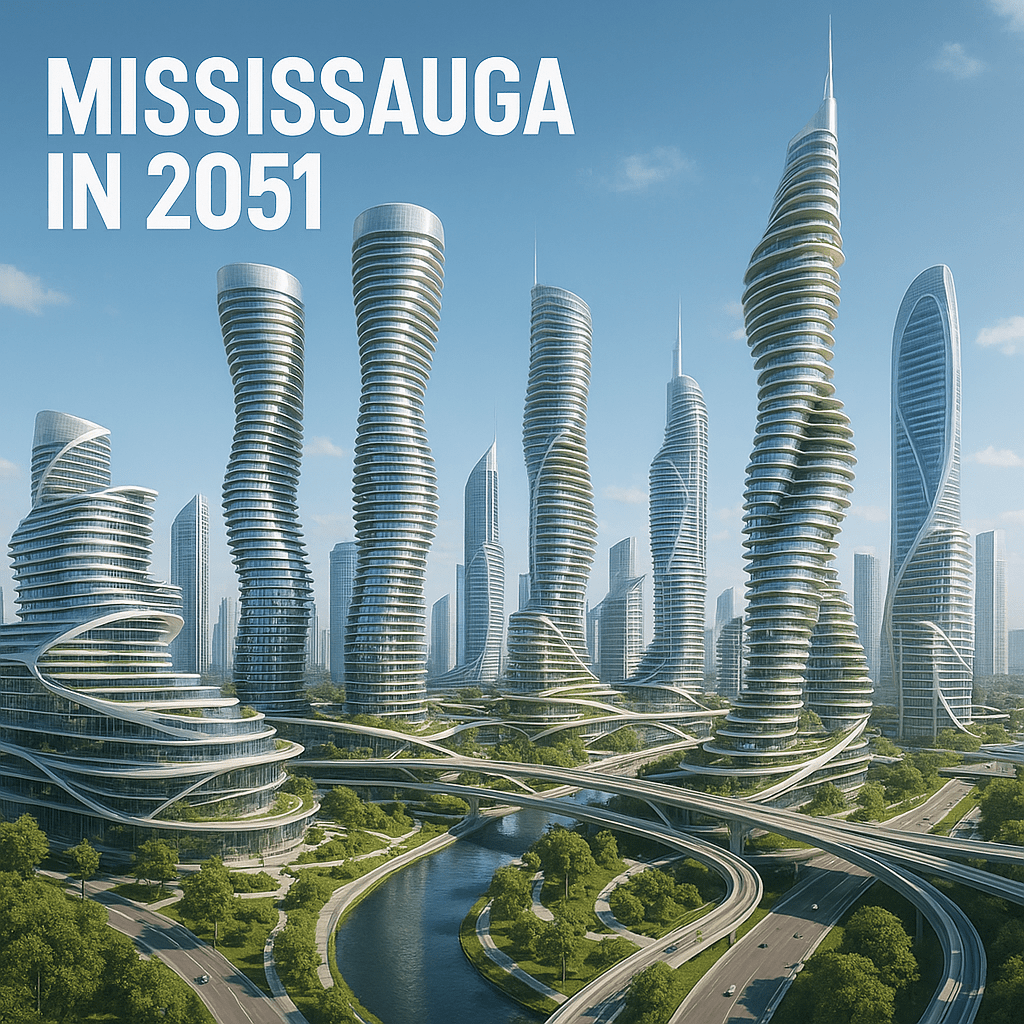
My first reaction to the image above is they’ve put the Absolute Condos on steroids! What scares me more, however, is the resemblance to Le Corbusier’s often-criticized Tower in the Park model from the 1950s, characterized by large greenspaces between high rise towers connected by highways with little regard for the human scale public realm. Despite the pathways along the water, it’s a predominantly car-oriented community, where urban planning mistakes of the past have been replicated.
Downtown Mississauga Street View

I have to admit the street level images are slightly better. The depiction of Downtown Mississauga (above) shows a bustling yet tranquil urban street that includes a well-utilized bike lane along wide boulevards full of pedestrians. At least It’s more consistent with commonly supported planning principles.
Kensington Market

As for the future of Kensington Market, I like that the streetside retail and heritage facades are maintained and that the sidewalks are widened while the roadway is kept narrow to attract a healthy volume of active mode users. Today’s community groups won’t be pleased about the towers on the lands adjacent. I admit the Chicago-style elevated train is pretty cool, although I wonder how the community consultations would have gone. 🙂
The Greenbelt
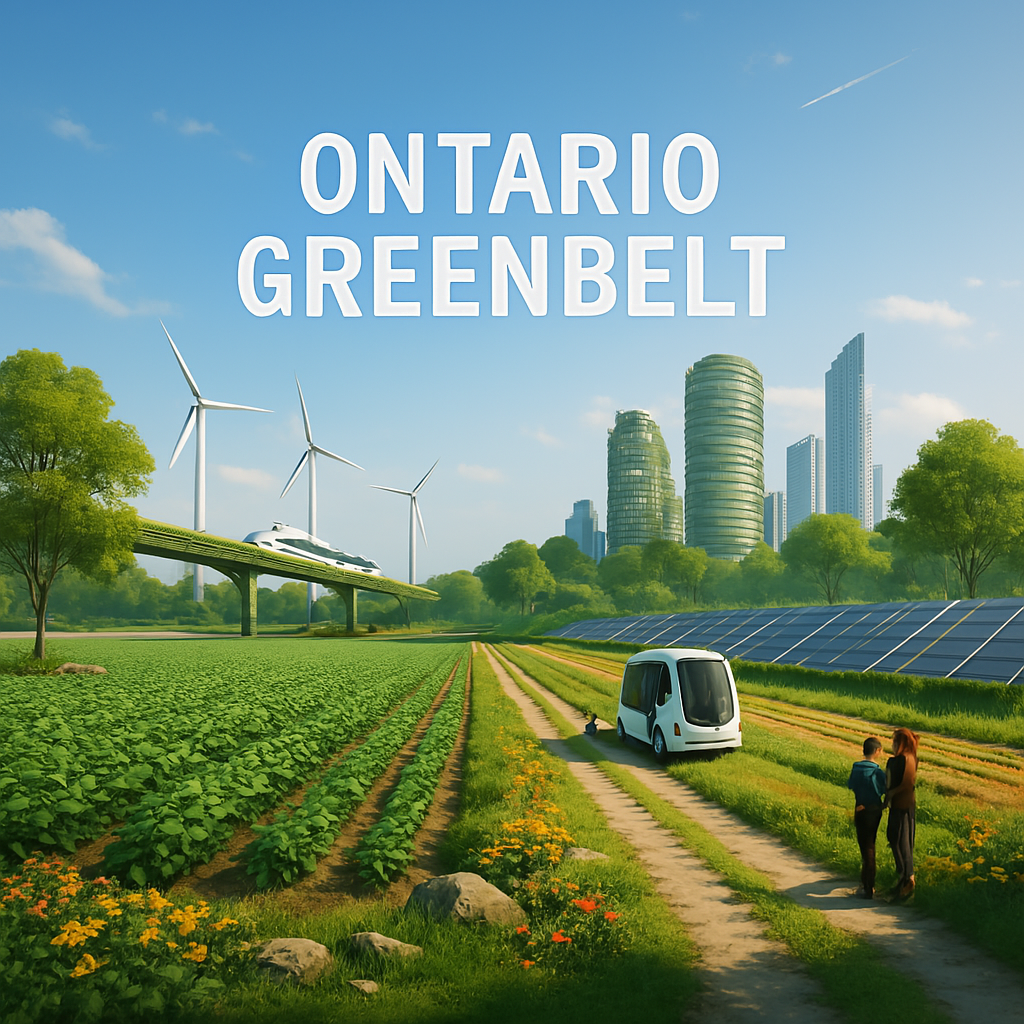
It appears that the developers and lobbyists finally get their way to have parts of the Greenbelt opened for development. The image above shows a built-up high rise (transit-oriented?) community and a farm peacefully coexisting next to one another. It’s a nice utopian setting but far from what actually transpired in the historically agricultural areas around Toronto, where all traces of farming and nature have been wiped out.
Greenfield Subdivision

This one I really have an issue with. This depiction of a greenfield subdivision in 2051 is comprised of single-use, low-density homes with driveways, as if we’ll continue building auto-dependent sprawl like it’s the 1950s despite all the dialogue on new urbanism and more sustainable suburbs. It would be nice to see some multiplexes, pedestrian-scale streets and small retail uses, in accordance with the aim of today’s land use plans and recent legislative changes to allow gentle density and small retail activity in residential areas.
Key Takeaways
While AI offers good entertainment, its depictions of the future are nothing more than science fiction. Although it acknowledges major long range trends like climate change action and intensification in major urban centres like Toronto and Mississauga, it lacks any regard for the nuances in the latest dialogue on urban and regional planning. It also fails to anticipate the challenges associated with bringing development to places like the Greenbelt and heritage areas.
 James Pyo
Leave a comment